
By Andrew Williams —
 Last month, in addition to Photocure ASA v. Kappos and Ortho-McNeil Pharmaceutical, Inc. v.
Lupin Pharmaceuticals, Inc., the
Federal Circuit completed the hat trick of patent term extension cases with Wyeth Holdings Corp. v. Sebelius. In this case, the Court affirmed the
statutory construction decision of the U.S. District Court for the
District of Columbia regarding when the testing phase ends and the approval
phase begins for particular New Animal Drug Applications (NADA).
For those not completely familiar with the patent
term extension scheme, despite the rash of PTE cases at the Federal Circuit, 35
U.S.C. § 156 provides that a patent holder can obtain an extension of patent
term due to the potentially lengthy regulatory process that is equal to one
half of the "testing phase" and the entire "approval phase." 35 U.S.C. § 156(c). This extension is limited to five
years, however. 35 U.S.C. §
156(g)(6)(A). The present case
involved an application for a new animal drug (as opposed to a drug for use in
humans). Normally, for animal
drugs, the "testing phase" begins when the sponsor submits to the FDA
an Investigational New Animal Drug ("INAD"), and the "approval
phase" begins when a New Animal Drug Application ("NADA") is
filed with the FDA. However, the
FDA introduced a "phased review" program available only for animal
drugs. In phased review, the
sponsor can submit various technical sections before submitting the entire NADA. After the FDA completes review of each
of these sections, it sends a "complete letter" to the sponsor. All of the complete letters can be
combined with some additional administrative information in what is termed an "administrative
NADA." The goal of phased
review is to create a stream-lined process and speed the drug development
process. Moreover, a sponsor is
able to switch to the traditional NADA at any point during the process and
still incorporate by reference any of the complete letters received. And, similar to the traditional NADA
application, the FDA marks the beginning of the approval phase as the date the
sponsor submits the administrative NADA.
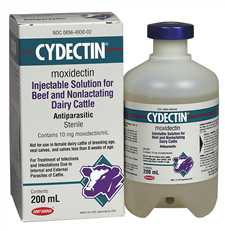 Wyeth sought FDA approval to market Cydectin for
the treatment and control of internal and external parasites in beef and dairy
cattle. Wyeth opted to use the
phased review procedure, and after it filed its administrative NADA, the FDA
approved the Cydectin 16 days later. Wyeth then sought patent term extension of U.S. Patent No. 4,916,154. However, Wyeth believed that the
approval phase should begin on the date that the first technical section was
submitted, not the date that the administrative NADA was filed. Wyeth asserted that this was the point
at which agency review could be commenced. The FDA maintained its position that the approval phase does
not commence until the marketing application was complete, including all
technical sections and the complete letters. Because it did not receive the full term that it thought it
deserved, Wyeth filed a complaint in the district court. However, the District Court entered
judgment in favor of the FDA.
 This case involved statutory interpretation, and
therefore Chevron U.S.A. Inc. v. Natural
Res. Def. Council, Inc. provides the requisite framework. Congress had provided for patent term
extensions in 35 U.S.C. § 156, but because the FDA created a stream-lined
system outside of this framework, the Federal Circuit needed to determine if it
fit within the Congressionally mandated scheme. As a review of Administrative Law, the first step in a Chevron analysis is to determine if
Congress directly spoke to the precise question at issue. The statutory provision in question
is:
35 U.S.C. §156 (c) The term of a patent eligible for extension under
subsection (a) shall be extended by the time equal to the regulatory review
period for the approved product which period occurs after the date the patent
is issued, except that-
(1) each period of the regulatory review period
shall be reduced by any period determined under subsection (d)(2)(B) during
which the applicant for the patent extension did not act with due diligence
during such period of the regulatory review period;
(2) after
any reduction required by paragraph (1), the period of extension shall include
only one-half of the time remaining in the periods described in paragraphs
(1)(B)(i), (2)(B)(i), (3)(B)(i), (4)(B)(i), and (5)(B)(i) of subsection
(g);***
(g) For purposes of this section, the term "regulatory
review period" has the following meanings:***
(4) (A) In the case of a product which is a new
animal drug, the term means the period described in subparagraph (B) to which
the limitation described in paragraph (6) applies.
(B)
The regulatory review period for a new animal drug product is the sum of –
(i) the period beginning on the earlier of the date
a major health or environmental effects test on the drug was initiated or the
date an exemption under subsection (j) of section 512 became effective for the
approved new animal drug product and ending
on the date an application was initially submitted for such animal drug
product under section 512 and ending on the date such application was
approved under such section
(emphasis added). The issue was whether Congress intended "initially
submitted" to apply to the administrative NADA or the individual technical
sections. The District Court
found, and the Federal Circuit agreed, that Congress did not define "application,"
nor did it define "initially submitted." Therefore, for the purposes of the administrative NADA,
Congress was ambiguous as to the interpretation of 35 U.S.C. § 156(g).
The second step in a Chevron analysis is to determine whether the agency's
interpretation is based on a permissible construction. In its analysis, the Federal Circuit
provided an Administrative Law lesson by explaining that it does not matter
whether Wyeth's construction is reasonable — the only relevant consideration is
the FDA's interpretation. And the
Court found that the FDA's interpretation was, indeed, permissible. Section 156(g) did not define "application." The FDA's interpretation tracked the
requirements of 21 U.S.C. § 360b(b) — the section of the statute that provides
the requirements for a new animal drug application, such as information on drug
safety, efficacy, and manufacturing. As the administrative NADA is the first document to contain all of these
parts, it is reasonable to interpret this date as the "initially submitted"
date. Besides, the Federal Circuit
noted that this was a trade-off for a more fluid review process, and in so
doing, rejected Wyeth's assertion that the new FDA process upset the balance
established between the interests of the pioneer and generic drug manufacturers.
Wyeth also argued that the FDA was acting in an
arbitrary and capricious manner because the implementation of the phased review
program was inconsistent with the "fast track" program available for
human drugs. However, the Federal
Circuit pointed out that the two programs differed in many respects. Nevertheless, for a fast track
application, the approval phase does not begin until the sponsor submits all of
the required information. As a
result, the Court found no inconsistencies between these two programs.
Wyeth Holdings Corp. v. Sebelius (Fed. Cir. 2010)
Panel:
Circuit Judges Bryson and Moore and Chief District Judge Folsom
Opinion by Circuit Judge Moore
 Patent Docs
Leave a comment